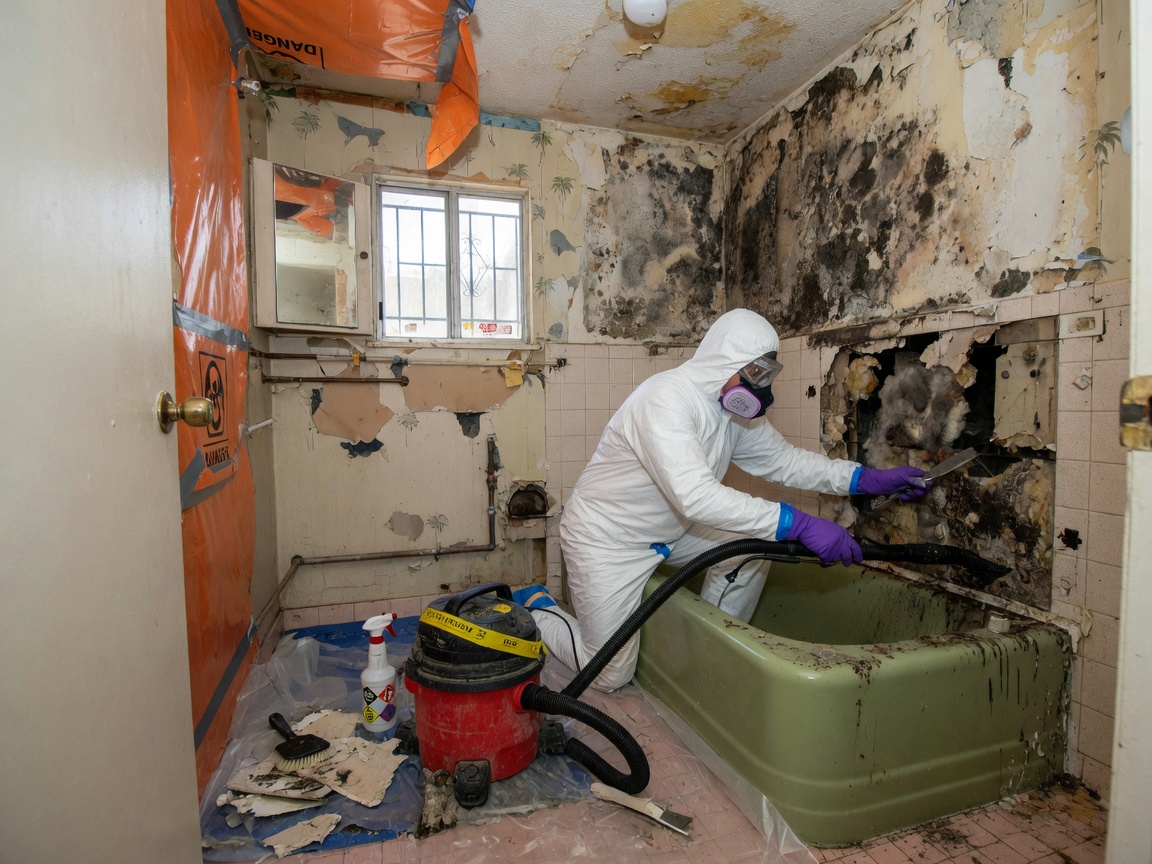
Los Angeles bathrooms in pre-1970 homes common in Echo Park, Boyle Heights and East Los Angeles often hide mold behind original plaster or single-layer drywall when galvanized pipes corrode. Mediterranean summers keep outdoor humidity low but shower steam trapped by poor venting creates ideal growth conditions behind tile. Remediation requires isolating the affected wall section, removing saturated material to the studs, and treating with EPA-registered antimicrobials before new moisture-resistant board is installed. Failure to locate the leak source, such as a hairline crack in a 1950s cast-iron drain under the slab, leads to rapid recurrence within weeks.
Coastal areas including Santa Monica and Venice face additional salt-air corrosion on metal fixtures that accelerates pinhole leaks in copper supply lines. Homes near the Getty Center or in Westwood with hillside grading can experience minor soil movement that stresses bathroom plumbing joints. Technicians must pull permits for any structural drywall removal in these zones and coordinate with Los Angeles County health guidelines on visible mold exceeding ten square feet. Proper negative-air containment prevents spores from migrating into adjacent living spaces during demolition.
Koreatown and South Central properties frequently feature 1980s fiberglass tub surrounds that delaminate at the seams, allowing water to reach the subfloor. Remediation here includes replacing the surround with a one-piece acrylic unit and adding a continuous Schluter-style waterproofing membrane at the floor-wall transition. Summer heat accelerates drying times but also increases dust circulation, so HEPA air scrubbers run continuously for 72 hours post-treatment to meet clearance criteria.
Technician insight
In Los Angeles the thing that catches most people out with Bathroom Mold Remediation is hidden leaks at the tub trap in pre-1960 homes in Silver Lake and Echo Park where the original cast-iron has shifted slightly on the slab.
Hidden Leak Behind Tile in Echo Park Bungalow
Homeowner noticed black spots along the baseboard after a week of heavy showers. Inspection revealed a slow drain leak behind the original 1948 tile that had soaked the drywall down to the floor joists. Crew contained the room, removed the saturated sections, treated the framing, and replaced the wall with cement board before reinstalling tile. The bathroom passed clearance testing and has remained mold-free through the following summer.
Bathroom Mold Remediation Services We Offer
✓Black Mold Removal
Full containment and removal of Stachybotrys from bathroom walls and ceilings in older Los Angeles housing stock where chronic leaks have soaked drywall.
✓Moisture Source Identification
Camera and moisture-meter inspection of plumbing behind tile in neighborhoods like Silver Lake and Echo Park to locate hidden leaks before remediation begins.
✓Ventilation System Upgrades
Installation of higher-CFM exhaust fans vented to exterior walls, critical in mild-winter Los Angeles homes where windows stay closed during cooler months.
✓Tile and Grout Restoration
Removal of mold-stained grout and re-sealing with epoxy in high-traffic bathrooms near Hollywood and Downtown where daily steam exposure is heavy.
✓Subfloor and Drywall Replacement
Replacement of water-damaged plywood and drywall in homes across East Los Angeles where older slab plumbing has leaked undetected for months.
Bathroom Mold Remediation Cost in Los Angeles, CA
| Service | Typical Range | What Affects It |
|---|---|---|
| Small localized patch (under 10 sq ft) | $650–$1,200 | Single wall section in accessible bathroom; price rises with permit fees in historic districts. |
| Full shower surround remediation | $1,800–$3,400 | Includes tile removal and subfloor drying; higher in hillside homes with access limits. |
| Whole bathroom gut and rebuild after mold | $4,500–$7,800 | Multiple walls plus ventilation upgrade; varies by material upgrades chosen. |
Ranges are typical for Los Angeles, CA and confirmed with an exact written quote before any work starts.
How it works
- 1
Initial Assessment
Technician arrives within hours, maps visible growth, and uses moisture meters on walls and floors in the affected Los Angeles bathroom.
- 2
Containment Setup
Plastic barriers and negative-air machines isolate the space to prevent spore spread into hallways or adjacent rooms common in compact city homes.
- 3
Material Removal
Saturated drywall, insulation and tile are cut out to clean substrate, with debris bagged and removed following county disposal rules.
- 4
Drying And Treatment
Industrial dehumidifiers and HEPA scrubbers run until moisture readings drop below 15 percent, followed by antimicrobial application.
- 5
Final Rebuild And Testing
New moisture-resistant materials installed, then independent air sampling confirms clearance before the bathroom returns to service.
Pricing
Cost depends on square footage affected, depth of wall demolition required, and whether plumbing repairs are needed in older Los Angeles stock.